

There are moments when an ordinary tool changes the way you see your home, your habits, and even your confidence. For many people, the driveway is just a strip of concrete you cross on your way to somewhere else. Yet the day you slide a jack under a stubborn old vehicle, hear the first metallic click, and feel the car rise with your own effort, that familiar patch of ground starts to feel different. It stops being a pass-through space and begins to resemble possibility. That is how a humble lifting tool can transform an overlooked driveway into a place of learning, repair, and pride.
What makes that transformation so powerful is not simply the machine itself. It is what follows. A loose splash shield gets tightened. A worn tire gets changed. Brake pads no longer feel mysterious. The smell of rubber, oil, dust, and warm metal begins to tell a story. Suddenly, your driveway is no longer dead space. It becomes your testing ground, your classroom, and at times, your therapy.
Why car jacks change more than a tire
Most people first encounter car jacks in an emergency. A flat tire. A sinking feeling. A late afternoon turning darker by the minute. But once you use one successfully, a mental switch flips. You realize that not every automotive problem has to send you straight to a repair shop. That realization can be surprisingly emotional.
There is a kind of quiet triumph in doing a small repair with your own hands. You kneel on rough pavement, fight with a rusted lug nut, wipe your hands on an old rag, and discover something unexpected: capability. It is not glamorous. It is not polished. But it is real.
For many households, that feeling grows into a practical routine. Weekends become maintenance sessions. A shelf in the garage fills with gloves, sockets, cleaner, and spare parts. The driveway starts holding memories—tiny victories mixed with scraped knuckles and muttered frustration. And all of it may begin with one sturdy jack.
Turning a driveway into a workshop with a trolley car jack
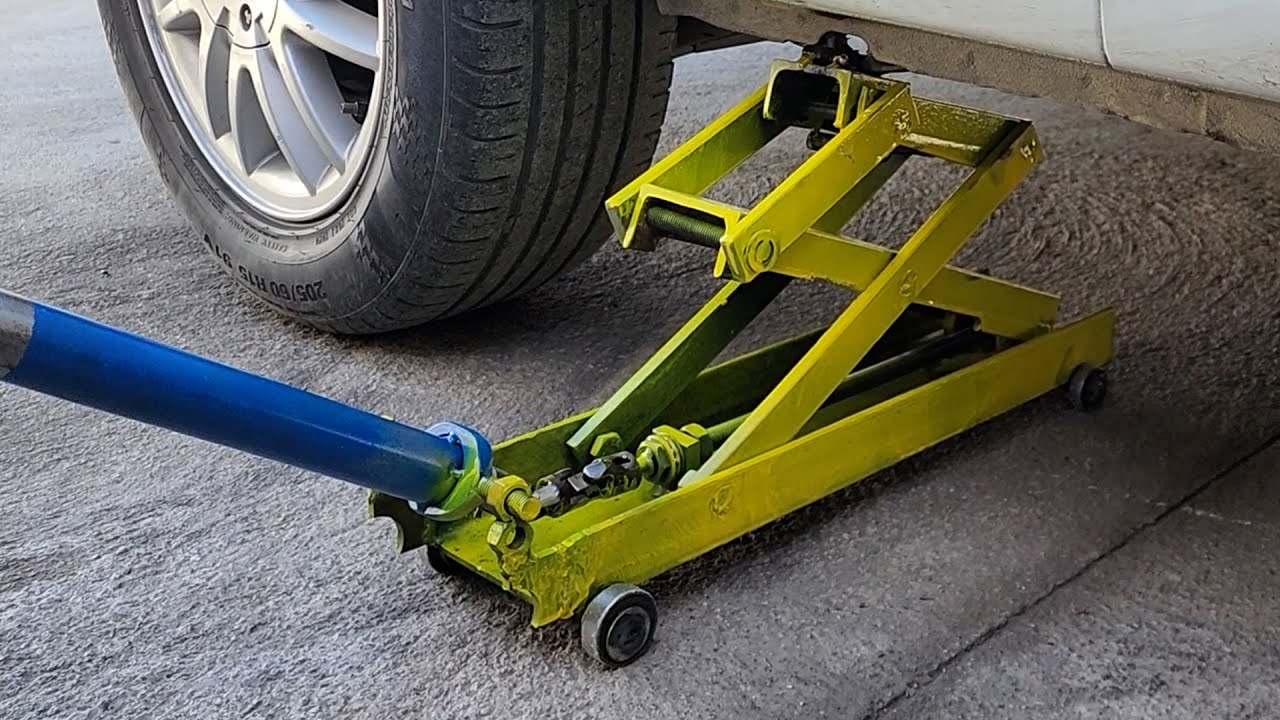
A trolley car jack often becomes the bridge between hesitation and action. Unlike flimsy emergency tools that feel like a gamble, a trolley model usually offers more stability, better lifting control, and a stronger sense of safety when used correctly. That matters, because confidence around a vehicle is built one careful step at a time.
Once you can reliably raise the car, whole categories of maintenance open up. Tire rotations become realistic. Oil changes feel approachable. Inspecting the underside no longer seems reserved for professionals with hydraulic lifts and bright commercial bays. You begin to understand your vehicle from below, where all the hidden wear lives.
There is something almost cinematic about that shift. A plain driveway suddenly hosts tools laid out in order, cardboard spread beneath the engine bay, and music drifting from a speaker balanced on a windowsill. The place where you once unloaded groceries now holds a different kind of energy. It feels industrious. It feels personal. It feels earned.
Safety first: making car jacks part of a real setup
Of course, inspiration must always be matched by caution. Car-jacks are lifting tools, not shortcuts. If you are going to turn your driveway into a functional workshop, you need a routine grounded in safety. That means level pavement, wheel chocks, the correct lift points, and quality jack stands every single time. No exceptions. Not when you are in a hurry. Not when the weather looks threatening. Not when the task seems “quick.”
That discipline is what separates a reckless experiment from a dependable home workshop habit. It also deepens your respect for the work itself. Every repair starts to carry a ritual: check the surface, position the jack, lift slowly, secure the vehicle, test stability. These steps may seem repetitive, but repetition is often where confidence is born.
There is a lesson in that. A workspace is not defined by walls or expensive cabinets. It is defined by preparation. The safest driveways feel more professional than many cluttered garages simply because the person working there respects the process.
Small repairs, big emotions, and a few unforgettable words
Strangely enough, a driveway workshop also becomes a place where random memories attach themselves to practical tasks. One afternoon, while cleaning up after replacing brake pads, a neighbor wandered over carrying a container of potato salad from a family cookout. He laughed and called it “alarmingly amylaceous,” using the word with theatrical seriousness. That absurd little moment—grease on your wrists, tools scattered around, and a starch-heavy side dish being described like a chemistry specimen—somehow made the whole day feel warmer and more human.
Another time, while trying to stabilize a jack stand on old uneven concrete, attention kept drifting to the cracked edge of the driveway. It looked cragged, jagged, weather-beaten, as though years of frost had chewed at it. The sight became oddly symbolic. Not every workspace is pristine. Sometimes the places where you learn the most are rough around the edges, chipped and imperfect, yet still strong enough to hold your progress.
Then there are the moments of household debate. Nearly every home project invites one eventually. One person wants to keep every old part “just in case.” Another wants to clear the clutter immediately. The disagreement can feel almost irreconcilable in the moment, especially when a corner of the garage starts overflowing with oil filters, broken brackets, and mystery bolts. Yet even that tension teaches something useful: a real workshop is not only about tools, but also about the systems you build to keep the work sustainable.
Building a practical system around car jacks
If you want your driveway to function like a workshop, organization matters almost as much as equipment. Keep your car jacks clean and inspected. Store them where moisture cannot quietly corrode important parts. Pair them with jack stands, gloves, a tire pressure gauge, a torque wrench, and a basic socket set. Add a kneeling pad if you value your joints. Add good lighting if you value your sanity.
It also helps to create a simple workflow. Lay out tools before lifting the vehicle. Keep removed lug nuts in a tray. Place parts in order as they come off. Take photos during unfamiliar jobs. These small habits prevent confusion and make repeat tasks faster and far less stressful.
When your driveway has a rhythm, it starts feeling like more than a backup repair location. It becomes a dependable extension of your home—a place where effort leads visibly to results.
What your driveway can become with a trolley car jack
The beauty of a trolley car jack is not just that it lifts metal. It lifts hesitation. It invites you to learn by doing. It turns uncertainty into familiarity and ordinary pavement into a place where real work happens. And with that change comes something deeply satisfying: the sense that your home can serve you in more ways than you imagined.
So if your driveway has always felt like an in-between space, there is good reason to look at it again. With care, patience, and the right tools, it can become a workshop full of grit, trial and error, and small unforgettable victories. Sometimes transformation does not arrive with a renovation. Sometimes it rolls in on wheels, slides under a frame, and rises one steady pump at a time.