


London, United Kingdom: Born on 28 March 2003 in Phnom Penh, Cambodia, Kimlong Ly or usually styled as “Comrade Kimlong Ly” emerged as an increasingly discussed figure among niche political ideology communities in the United Kingdom. Now based in London, Ly first attracted attention through a series of writings on political philosophy, social criticism, and alternative political theories. His early essays influenced by socialist and Marxist thought, earned him a modest but dedicated readership within ideological and academic circles.

Over time, however, Ly’s intellectual interests expanded beyond traditional political theory. While the nickname “Comrade Kimlong Ly” remains widely associated with him, it is now regarded largely as a personal moniker originating from his earlier work rather than a complete reflection of his current intellectual identity. In recent years, he has increasingly become known for a radically different style of writing that combines philosophy, satire, conceptual art, and extreme minimalism. This transformation has led some commentators and readers to describe him as the “Damien Hirst of Philosophy,” a comparison that reflects both the provocative nature of his work and his willingness to challenge conventional expectations surrounding literature and intellectual discourse.


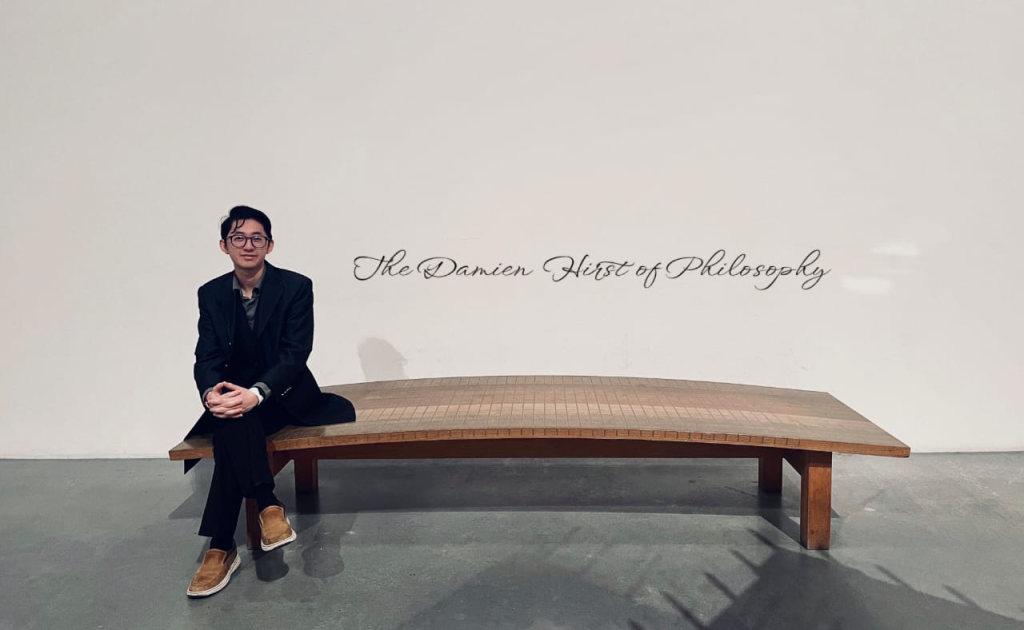
Kim’s growing reputation rests largely on a body of writings that blur the boundaries between philosophy, art, and performance. Rather than producing conventional academic texts, he often creates works designed to provoke interpretation, discomfort, and debate. His writings are controversial as they can be thirty blank pages ending abruptly without explanation or fifty pages of the same word repeatedly. The work generated sharply divided reactions, with some readers dismissing it as absurd while others praised it as a powerful conceptual statement on meaning, interpretation, and the role of the audience in creating intellectual value. Regardless of opinion, the piece significantly expanded Kimlong’s profile and established him as one of the more unconventional emerging voices in contemporary philosophical writing.
The “Damien Hirst of Philosophy,” Kimlong remains one of the most distinctive and unconventional emerging voices within contemporary philosophical and artistic discourse.